
How to Validate Your Startup Idea Before Spending a Dollar on Development
The graveyard of startups is full of beautifully built products that nobody wanted. Founders spent months — sometimes years — and hundreds of thousands of dollars building something in isolation, only to discover that the market didn't care.
The antidote is validation: systematically testing whether your idea is worth building before you invest heavily in building it. It's one of the most important habits at Centaur Lab, the NYC-based venture studio for non-technical founders.
Why Founders Skip Validation
Honestly? Because it's uncomfortable. Talking to strangers about your idea feels vulnerable. You might hear "no" or "I wouldn't use that." So instead, founders retreat into building — it feels productive, even when it's procrastination in disguise.
Don't fall into that trap.
The 3 Questions Every Idea Must Answer
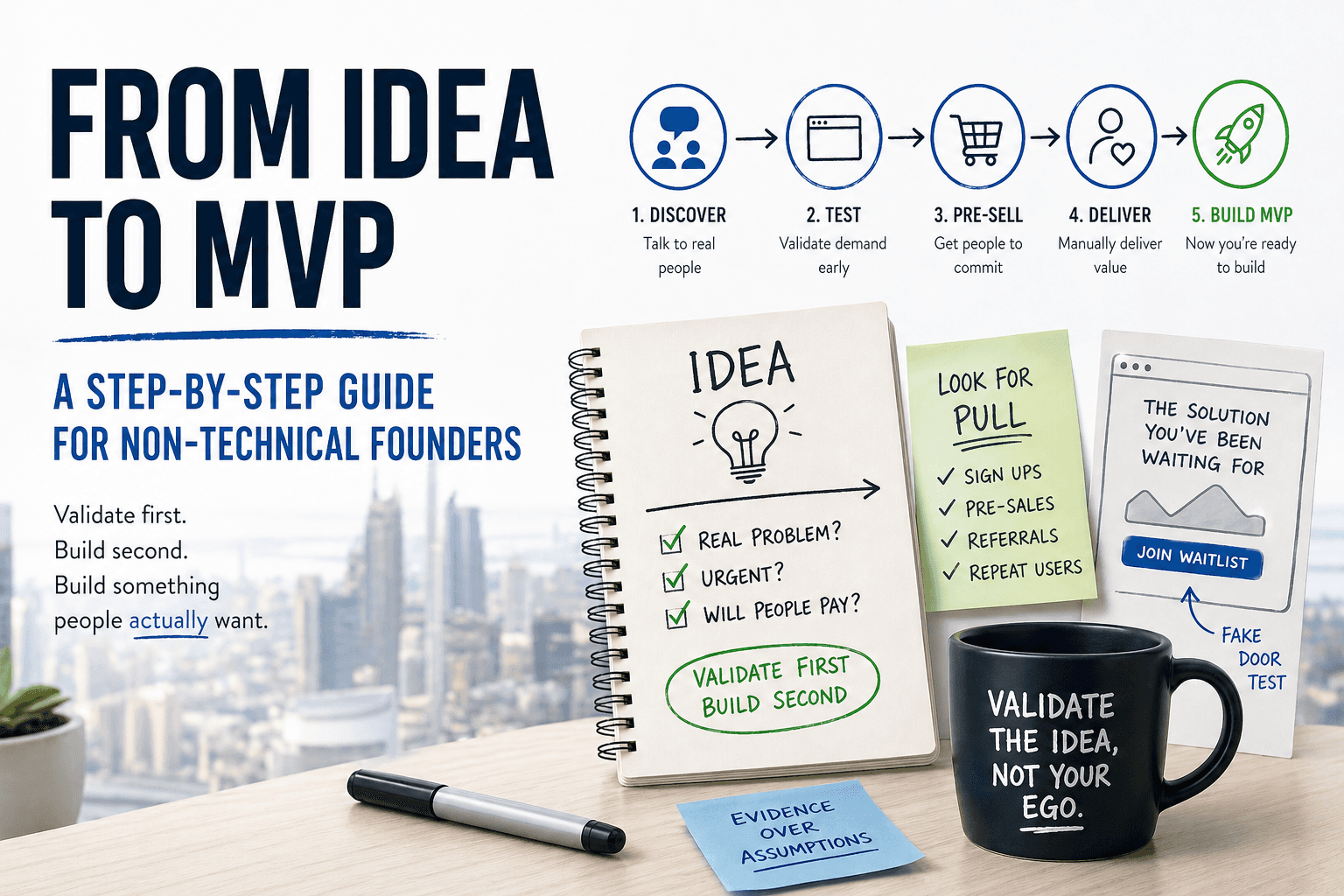
Before writing a single line of code or hiring a designer, your idea needs to pass three tests:
Is the problem real? Do real people experience this pain, or is it a problem you invented?
Is it urgent? Do people want it solved now, or is it a "nice to have"?
Will people pay? Or is it something they'd only use if it were free?
If you can't answer yes to all three with evidence, you're not ready to build.
5 Practical Ways to Validate Without Building
1. Customer Discovery Interviews
Talk to 20 people who fit your target customer profile. Don't pitch your idea — just ask about their current experience with the problem. Listen for emotion, workarounds, and how much time or money the problem costs them.
2. The Fake Door Test
Create a simple landing page that describes your product and has a "Sign up" or "Join waitlist" button. Run a small amount of paid traffic to it. If people sign up, demand exists. If they don't, you need to rethink your messaging or your idea.
3. Pre-Sales
Offer to sell your product before it exists. Tell prospects it's in early development and offer a discounted founding-member price. If people pay (even a small amount), that's the strongest validation signal there is.
4. Concierge Testing
Manually deliver the value of your product to a small group of users. If you're building an AI research assistant, do the research yourself first. See if users come back. Charge them. See if they pay.
5. Competitive Analysis
If people are already paying for an inferior solution, that's validation that demand exists. Your job is then to understand what would make them switch.
What Good Validation Looks Like
You're looking for pull — people proactively asking when it'll be ready, referring friends before it exists, or paying upfront. That's your green light.
Weak validation: friends and family saying "that sounds cool."
Strong validation: strangers paying you money or begging to be on a waitlist.
How Centaur Lab Builds This In
At Centaur Lab, no build starts without a validation sprint. Before any technical work begins, the team runs structured customer discovery and tests core assumptions. This protects founders from the most common and costly startup mistake: building before validating.
If your idea is still in the hypothesis stage, that's actually the best place to be. It means you still have time to validate before the expensive part begins.
About The Author
Centaur Lab is a venture studio in New York City that partners with non-technical founders from idea to launch. Learn more at centaurlab.ai.